
When I think of the Land Cruiser, I am immediately transported back to Namibia in the early two-thousands. I was with Ray Mears, learning bushcraft and tracking, meeting Kalahari Bushmen, and bouncing through that vast desert in three very different Land Cruisers. One was so old it creaked when you looked at it wrong, but it never broke. The others were newer, but even when they faltered, the mechanics fixed them by the side of the road with a calmness born of knowing these machines are made to last. That trip left a mark on me. The Land Cruiser was never just a car; it was a steadfast companion in places where most vehicles would throw in the towel.
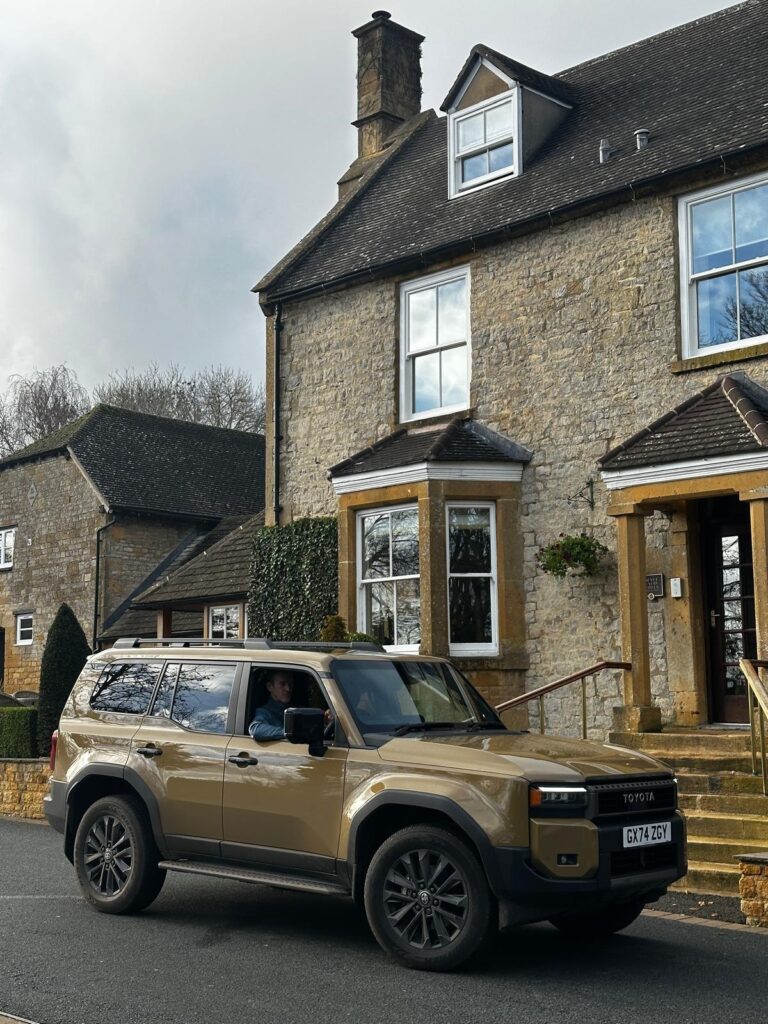
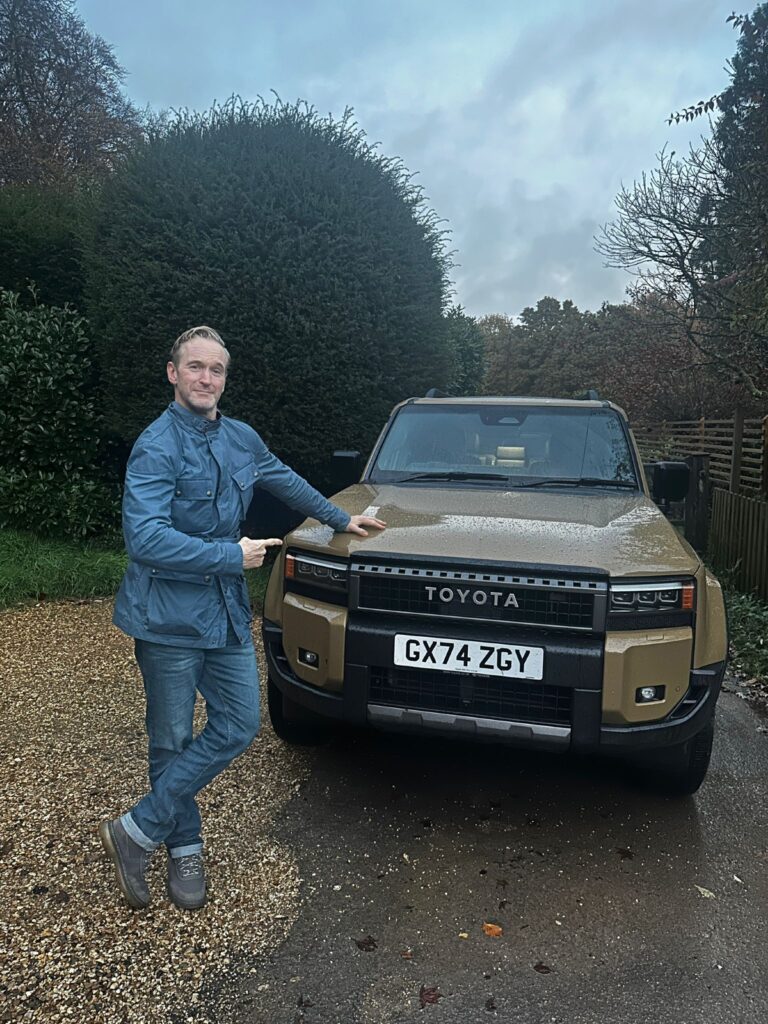
So when the new Land Cruiser 250 landed in the UK for testing, I was both excited and sceptical. In recent years, the Land Cruiser’s styling felt like it had gone soft: too rounded, too “anonymous SUV.” This model, though, feels like Toyota has remembered again what the Cruiser was built for.
Design That Speaks of Heritage and Purpose
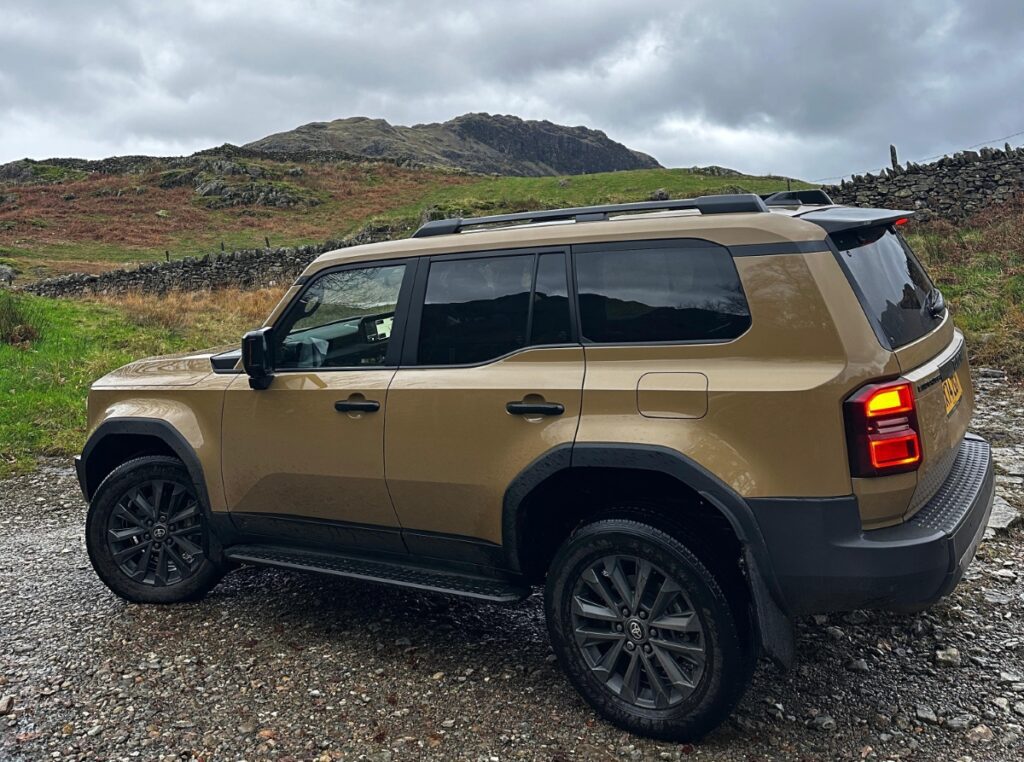
This latest Land Cruiser has presence. It is visibly large without being round and bloated, rugged yet refined like some chiselled explorer of yesteryear. There is a deliberate strength to its form. What I particularly appreciate as someone who cares about both function and form is the different headlight choices that have been released. You may have seen the retro-style lamps that evoke the Cruisers of old, as well as the slim, modern LED units for a more contemporary look. Both work beautifully and feel very intentional.
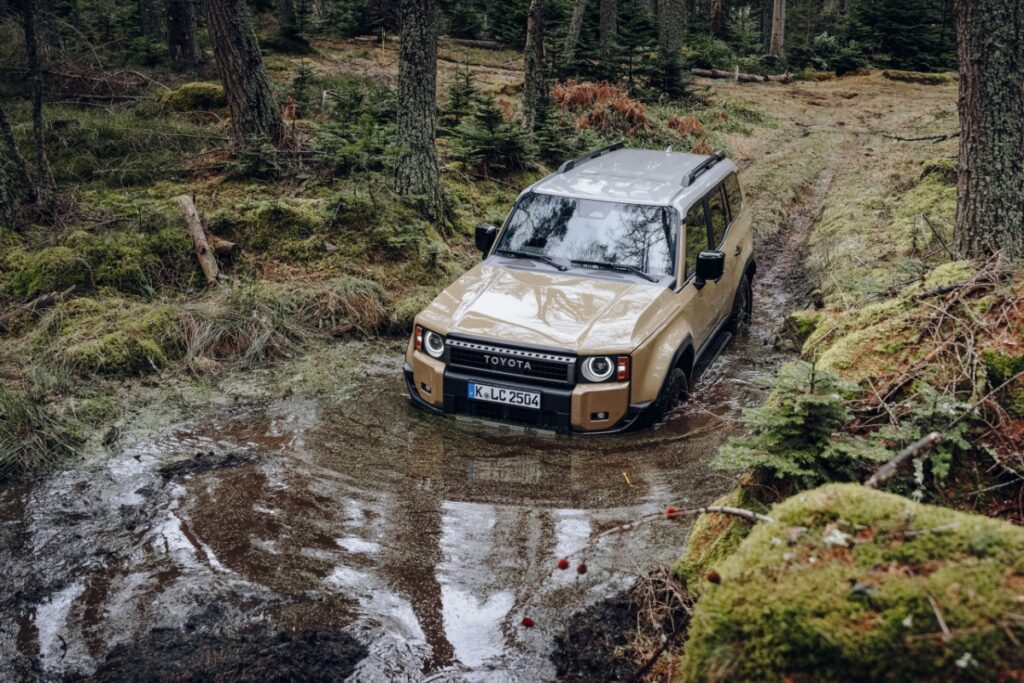
The body feels tough, designed for real work, not just showroom style. There is a sense that Toyota did not just aim to produce a luxury vehicle; this is a tool, but a very well-made one.
Commanding Presence on the Road
Getting into the driver’s seat is a different experience from most modern SUVs. The height at which you sit is commanding, as if you are genuinely looking down on a lot of traffic. On a rainy motorway run, this was a quiet delight: while spray swirled around lower cars, I could see ahead with clarity, as though I were watching a play from a very good seat in the theatre.
Parking a vehicle this size could easily be a chore, but Toyota has given the Land Cruiser excellent camera systems. The 360-degree view means you can manoeuvre without second-guessing, and the elevated vantage point without a giant tyre hanging off the back door helps when threading through tighter spaces.
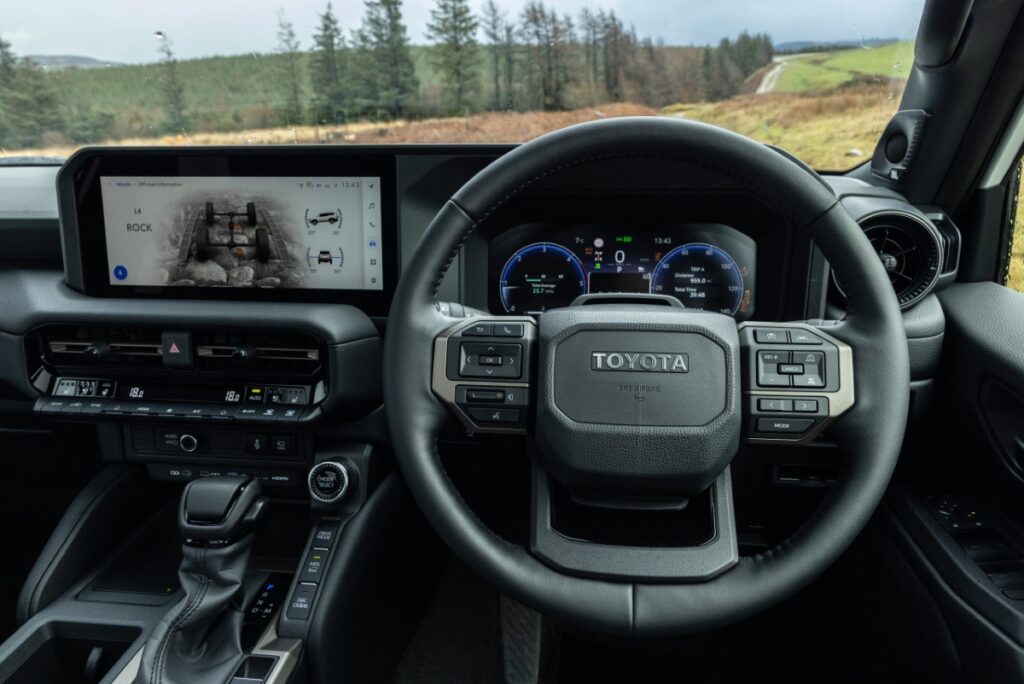
I also sensed real solidity under me. There is something reassuring in the way the car feels built rather than assembled. Having heard tales of Cruisers getting into accidents and emerging battered but intact, I was not surprised by the feeling of resilience.
Off Road, Serious Capability, Without Fuss
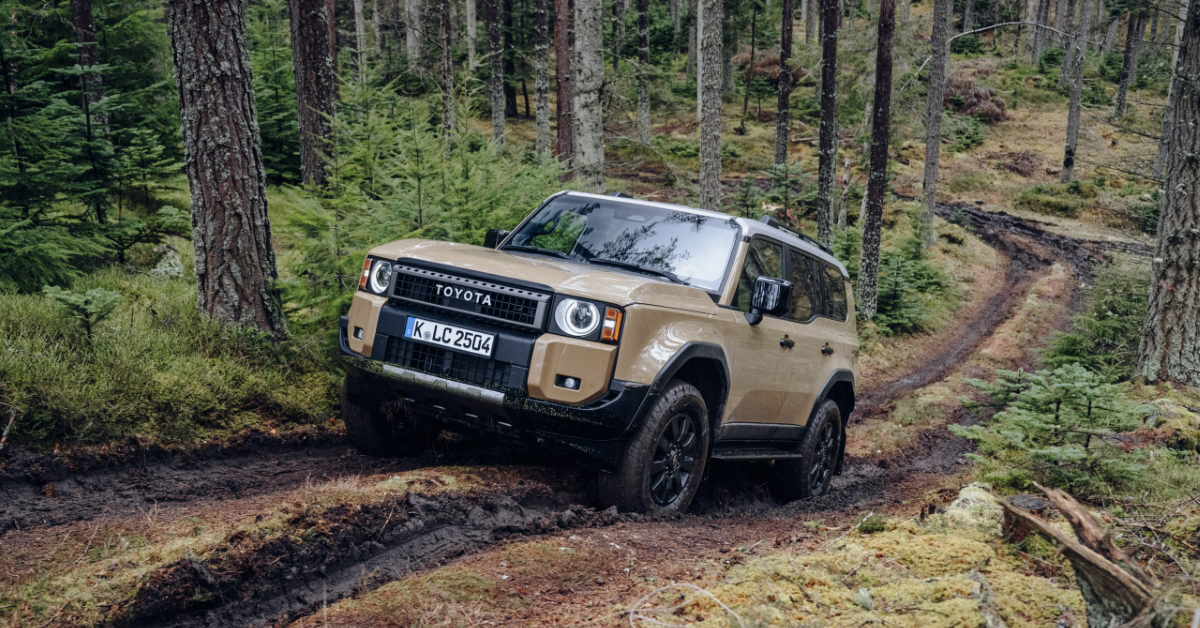
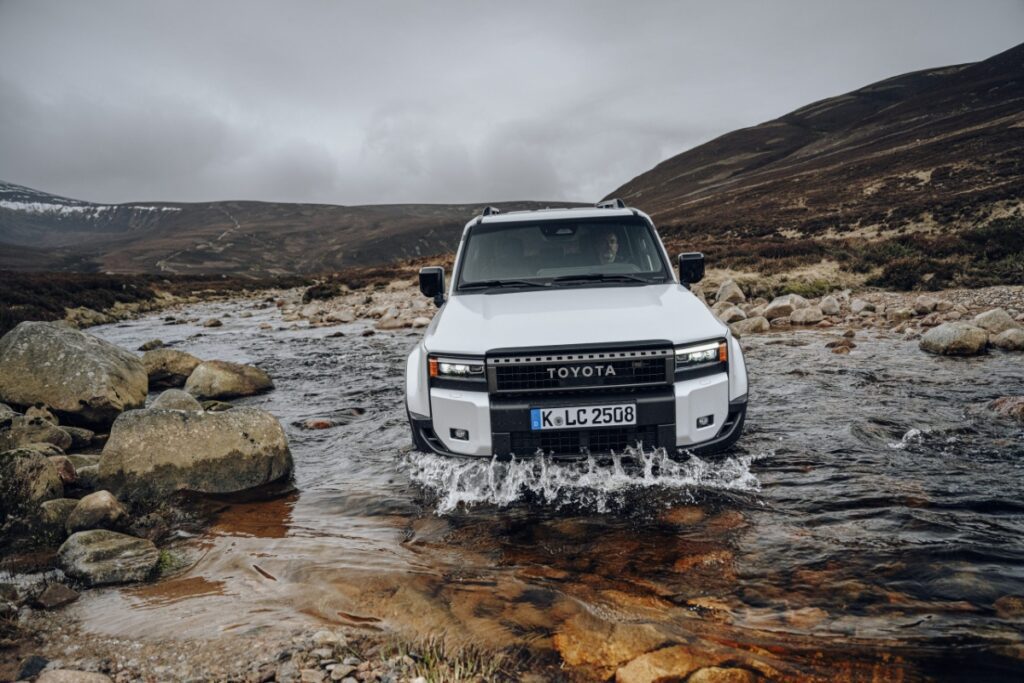
To truly test the Land Cruiser, I drove it up and down the farm track to my house, a battered, muddy, steep mile of challenge. It was a real test. But the Cruiser simply glided through. Its weight, surprisingly, works in its favour here; where other SUVs bounce and thud around as if reentering the atmosphere, the Land Cruiser absorbs, tames and smooths. Pure art.
Toyota has equipped it with terrain-select modes, including mud, snow and dirt and a smart automatic mode that adjusts on the move. I flicked between settings, road to off-road, and the changes are not gimmicks: throttle, traction and braking adapt intelligently.
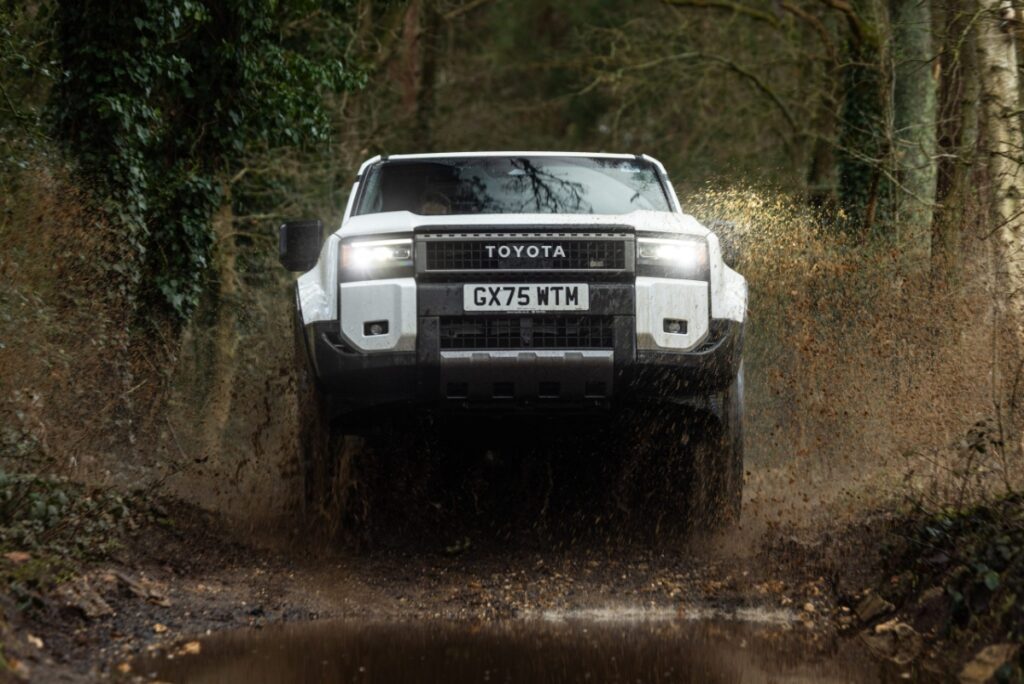
One of the cleverest bits is a slow-descent mode. Select it, and the vehicle takes over control of its speed on steep, slippery slopes. On my muddy farm track, that feature felt like having an off-road coach in digital form: you steer, and it does the rest. In snowy fields, where underlying grass and leaves made the surface treacherous, that creep-control brought genuine peace of mind.
Another technical but elegantly simple trick is the stabiliser-disconnect. Press a button and the front anti-roll bar releases, letting the wheels articulate more freely. It translates to better grip in uneven terrain. A subtle but effective piece of engineering that shows Toyota has thought deeply about what “serious off-road” means.
On the Tarmac, Comfort, Quiet and Refinement
On roads, especially longer drives, the Land Cruiser surprises. It feels calm. Even at motorway speeds, the cabin is hushed. Toyota seems to have spent real effort on sound insulation: better body sealing, smart engine mounts, and materials that absorb vibration. It all adds up to a refined, composed experience.
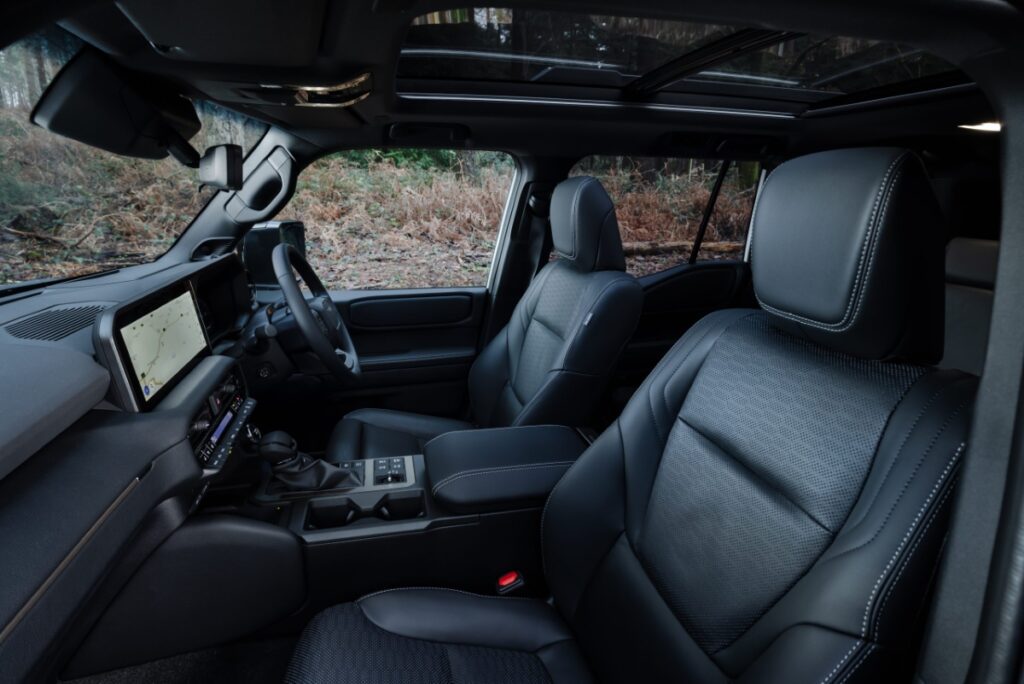
The feel behind the wheel is not what I expected from a large four-wheel-drive. Rather than being vague or lumbering, the steering is direct and composed. It corners with a confidence that belies its size, and during a trip through the Lake District, it felt planted even on sweeping bends.
Inside, the layout is straightforward, practical and well judged, not overly complicated, but not Spartan either. The central display is large, clear and responsive. Android or Apple, your phone connects and works with ease. Everything feels solid and designed to last, rather than fussy or fragile.
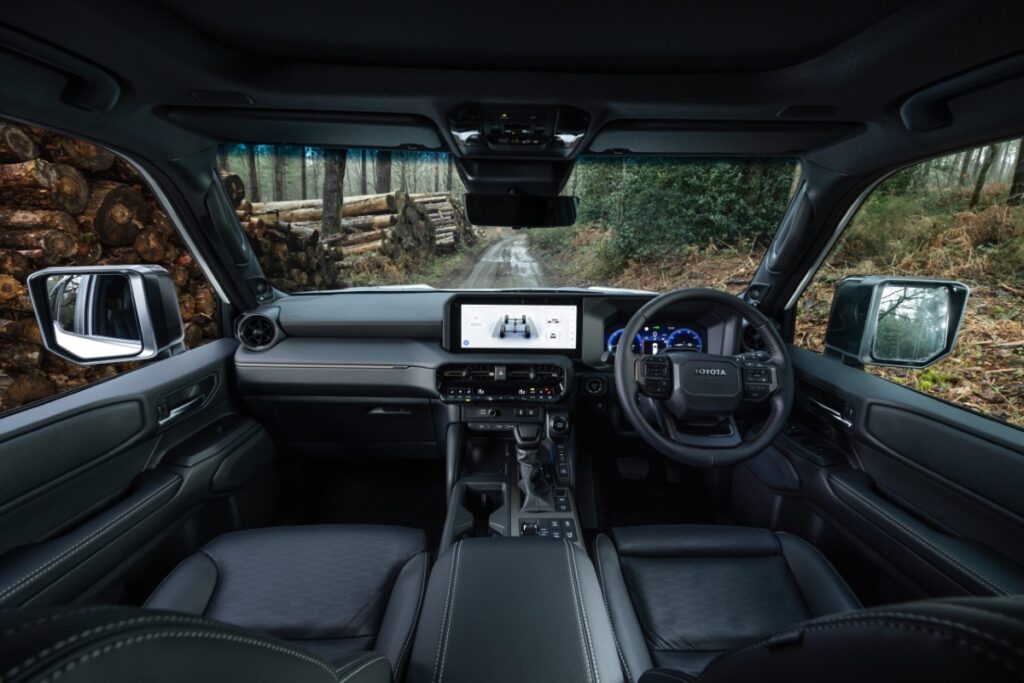
I particularly liked the panoramic glass roof, open the blind, and suddenly you feel more connected to the landscape. On a long drive through rolling valleys or woodland, the effect is relaxing, almost contemplative. It reminds you that a car like this is not just a mode of transport, it is a space to live in, while you travel.
Space, Practicality and Everyday Use
If you need real space, the Land Cruiser delivers. The boot is huge, big enough for a serious trip’s worth of kit, and two extra seats rise electrically when required. Yes, you can get seven in, and yes, you can fold them away when you do not need them. It feels very practical and not at all like a boxed-in add-on.
On my mind was a trip to the Alps. Skis, boots, luggage, maybe my art easel and some large canvases, I could easily fill the boot and still have room to spare. The Land Cruiser feels like the sort of vehicle you would happily pack for a serious expedition, while still being comfortable on the school run or a weekend escape.
A Week in Britain, From Cotswolds to the Pass
Over the week, I drove the Cruiser through the narrow lanes of the Cotswolds, tackled steep climbs in the Wrynose Pass, and powered through flowing, rolling roads in the Lake District.
The Wrynose Pass was a delight. It is steep with a 25% gradient, twisty and evocative, and the Cruiser felt composed the whole way. When you do need to pull off the road, it does so with confidence, not awkwardly. Later in the Lake District, on wider roads, it opened up beautifully. The ride was calm, the handling assured, and I felt like I was driving something far more capable than the average SUV.


Driver Aids, Helpful?
There are many driver assistance systems. Some are very useful. I loved the warning for fast-approaching vehicles from behind, which feels like a sensible guardian angel on motorways. Although others are a little more insistent, speed alerts, lane reminders and proximity warnings sometimes nag you like an over-eager instructor.
Being a grown-up, I switched a few off. The technology is very capable, and while it is reassuring, part of the joy of driving a Land Cruiser is the sense that you are in control. Toyota gives you the option, which is refreshing. It feels like having a helpful co-pilot, not a bossy parent.
Character, Legacy and Long-Term Appeal
What really struck me over the week was that the Land Cruiser reminded me of those machines I encountered in the Namibia Desert, built to endure, to work, to explore, but also refined enough for day-to-day life. It is not a show pony. It does not shout. It simply does what a Land Cruiser is meant to do. Whilst here, on British roads, it feels entirely contemporary, safe, comfortable, quiet, and composed.
Final Thoughts: Would I Own One?
In a heartbeat, and not just because it stirs up memories of my desert adventures. What Toyota has done with this new Land Cruiser is remarkable; they have managed to honour its heritage, those tough Land Cruisers of old, whilst pushing the boundaries of what a modern SUV is. This is a contemporary, very capable and very credible four-wheel-drive.
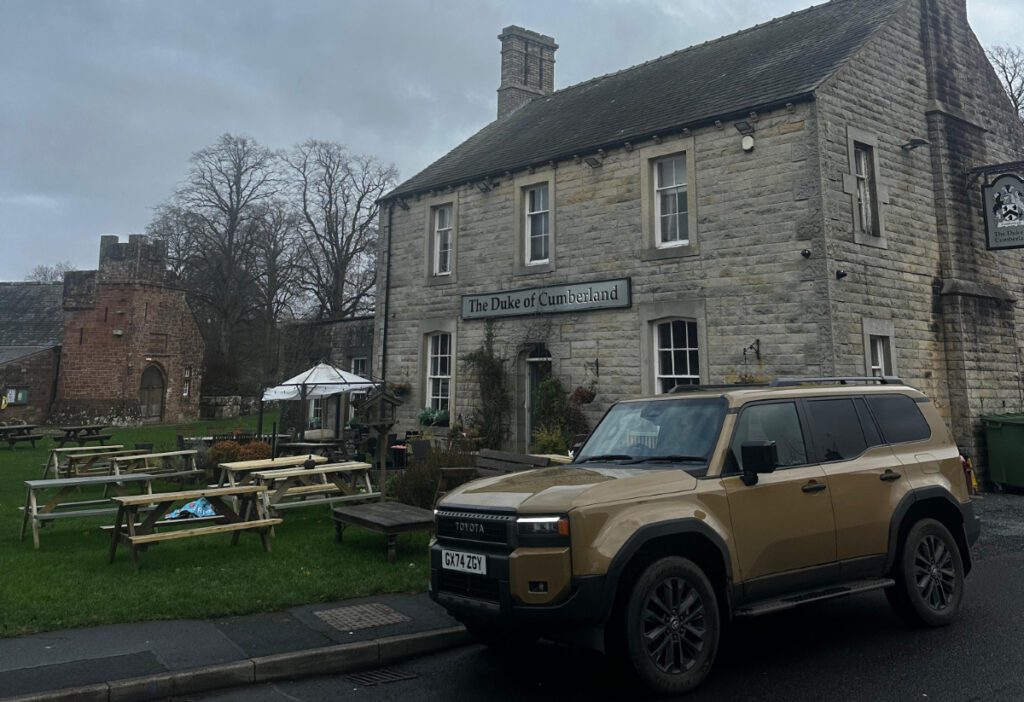
I can imagine taking this on serious trips, from my off-road farm track to mountain passes, remote roads and snow-packed valleys. I can also imagine daily driving, popping to town, running errands, picking up the groceries, and fulfilling my duties as a Vinted husband. It feels like one of those rare vehicles that can be both an explorer and a local run-around.
After the week with it, handing back the keys was tough. Part of me wanted to drive off into the hills, to take the LC250 somewhere wild and see how far it could go. They appear to be rarer than hen’s teeth. But rest assured, I will bide my time, I will find a way of stepping into the club of Land Cruiser owners, a club that, once I join, I will probably never leave.
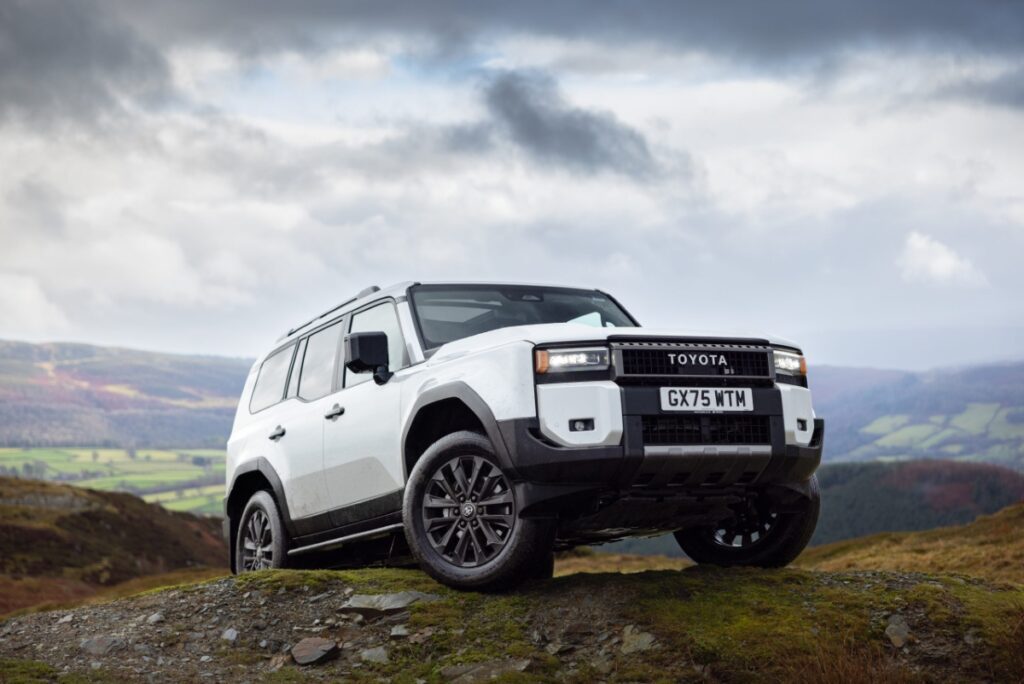
Toyota has done more than revive the Land Cruiser name; they have given it gravitas, personality and purpose. This is not just a new chapter for Toyota; this is a completely new book, one I am very eager to keep reading and never put down.